Curriculum
Mato Grosso do Sul
Mato Grosso do Sul: Discover the Charm of Brazil's Midwest
0/21
-
Welcome to Mato Grosso do Sul by Bruno Wendling
 Preview
 -
INTRODUCTION
Preview
-
Lesson 1 - General Information
Preview
-
Lesson 2 - What to Know Before Travelling
Preview
-
Lesson 3 - Useful Information
Preview
-
Lesson 4 - A Brief History
Preview
-
Lesson 5 - Geography
Preview
-
Lesson 6 - Demography
Preview
-
Lesson 7 - Economy
Preview
-
Lesson 8 - Campo Grande: The Capital of Mato Grosso do Sul
Preview
-
Lesson 9 - Types of Tourism in Mato Grosso do Sul
Preview
-
Lesson 10 - Pantanal I
Preview
-
Lesson 11 - Pantanal II
Preview
-
Lesson 12 - Bonito
Preview
-
Lesson 13 - Other Points of Interest in Mato Grosso do Sul
Preview
-
Lesson 14 - Culture
Preview
-
Lesson 15 - Gastronomy
Preview
-
Lesson 16 - Accommodation
Preview
-
Lesson 17 - Shopping
Preview
-
Lesson 18 - Nightlife in Mato Grosso do Sul
Preview
-
Course Completion Quiz


Lesson 7 – Economy
The economy of Mato Grosso do Sul reflects the importance of the state within the broader economic context of Brazil. With a solid foundation in agriculture and livestock farming, the state has also developed its industrial and tourism sectors.
Agriculture and Livestock Farming
Agriculture and livestock farming are the pillars of Mato Grosso do Sul’s economy, with the state standing out as one of Brazil’s major producers of agricultural commodities. Soybean production is particularly significant, with the state ranking among the largest producers in the country. In addition to soy, Mato Grosso do Sul cultivates maize, cotton, and sugarcane, all essential to the local and national economy.

Soybean Plantation – Photo: Mairinco de Pauda
Livestock farming also plays a crucial role, especially cattle ranching. The state is one of Brazil’s largest producers of beef, with extensive pastures supporting large herds. Dairy production and pig farming are also important activities. The combination of advanced agricultural practices and sustainable management techniques has enhanced productivity and competitiveness in the sector.
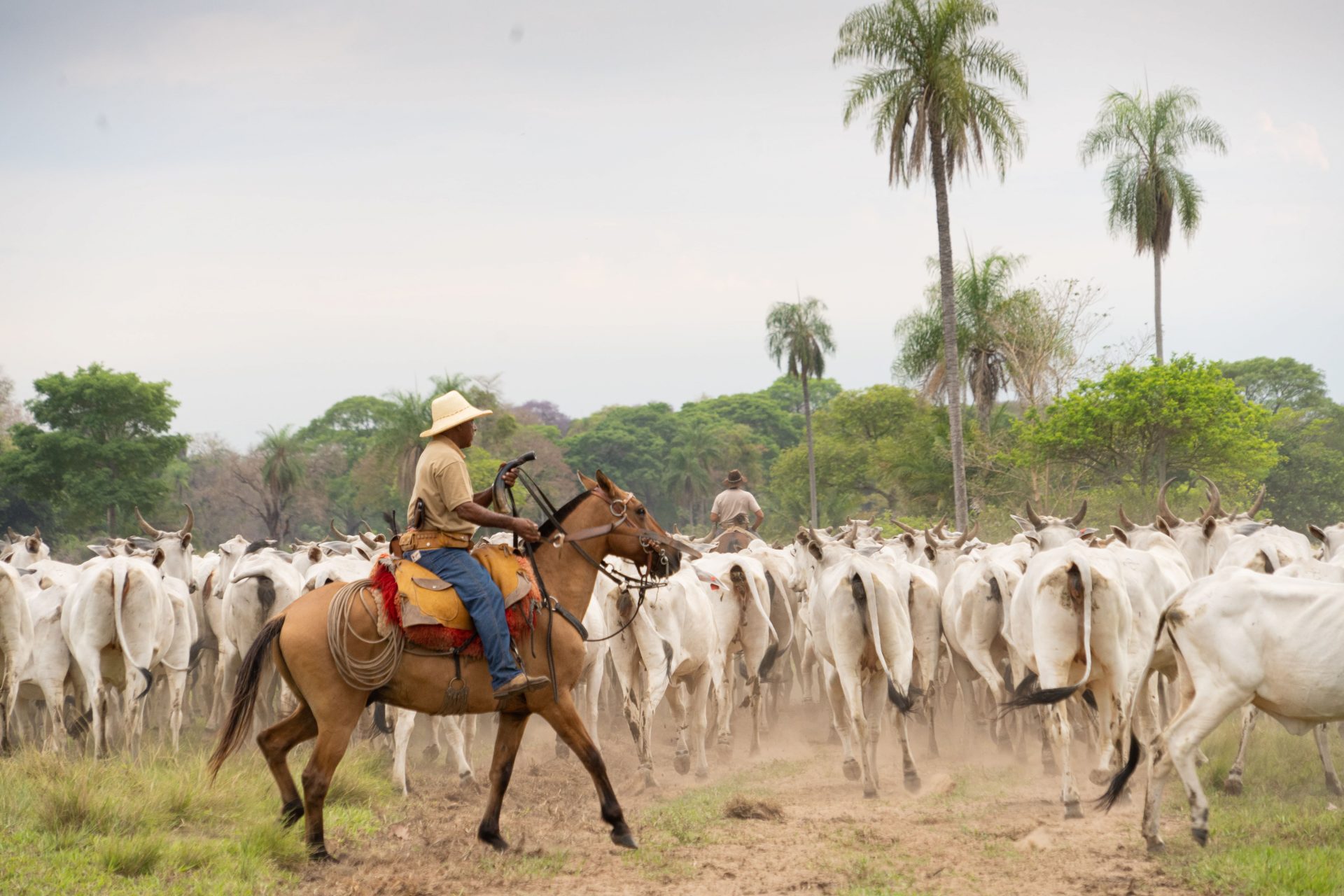
Pantanal – Aquidauana – Handles Cattle. Photo: Alexis Prappas
Industry
While agriculture and livestock farming dominate the economy, the industrial sector of Mato Grosso do Sul has been expanding in recent years. The manufacturing industry includes activities such as food and beverage production, chemicals and petrochemicals, and mineral extraction. The city of Campo Grande serves as a significant industrial hub, housing various companies and industries that contribute to the regional economy.

Horto Florestal – Center – Campo Grande / MS. Photo: Flávio André/MTur
Moreover, the industrial sector is driven by both domestic and external demand, with investments in infrastructure and technology aimed at improving efficiency and production. The presence of industrial zones and improved logistical conditions have favoured the growth and diversification of the industry in the state.
Tourism
Tourism is a growing sector in Mato Grosso do Sul, offering a diverse range of natural and cultural attractions. The main tourist draw is the Pantanal, one of the largest wetland areas in the world, attracting visitors interested in ecotourism and wildlife observation. The richness of the Pantanal’s flora and fauna provides a unique experience for nature lovers.

In addition to the Pantanal, Bonito is a renowned destination for its natural beauty, featuring crystal-clear rivers, caves, and waterfalls that attract tourists from across Brazil and around the world. Tourism in Bonito is characterised by sustainable ecotourism practices, which aim to preserve the natural environment while providing immersive nature experiences.

The state also boasts other tourist attractions, such as the Bodoquena Mountain National Park, known for its geological formations and areas of environmental preservation, and cities like Corumbá, which combine historical charm with opportunities for exploring the Pantanal surroundings.
The economy of Mato Grosso do Sul is supported by its strong agricultural and livestock foundation, complemented by a growing industrial sector and an expanding tourism industry. The integration of these sectors contributes to the economic development of the state, while initiatives focused on sustainability and innovation help shape its economic future. The diversity of economic activities reflects the richness and complexity of Mato Grosso do Sul, making it an important player on the national stage.